

Trial Without Catheter
Safe catheter removal and monitoring at home, helping patients regain normal bladder control comfortably.
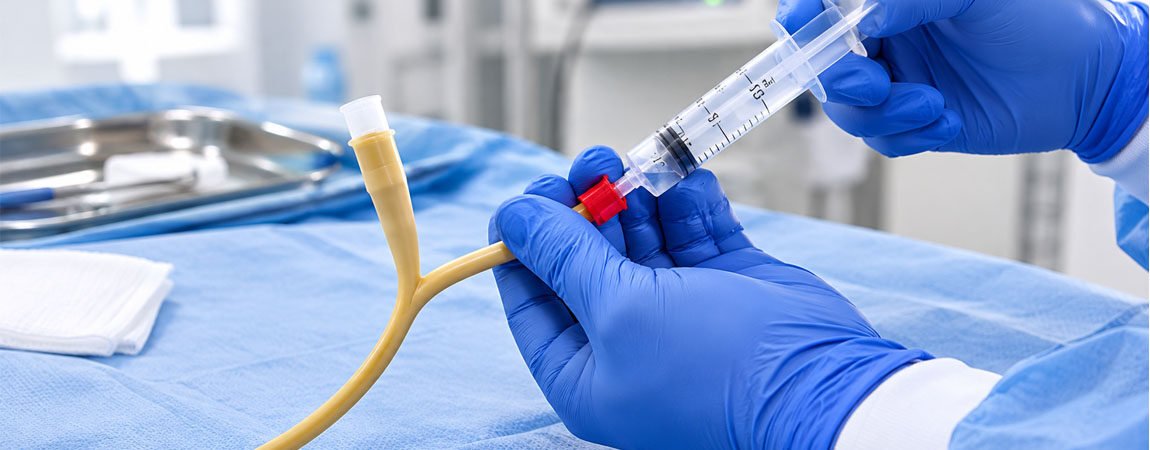
Service Overview
Please prepare for your TWOC appointment by following these important steps:
Present a letter from your Doctor confirming that your catheter should be removed.
Stay well hydrated by drinking plenty of fluids, as you’ll need to urinate 2–3 times after removal.
Ensure you are not constipated, as this can prevent proper bladder emptying.
The nurse will remove your catheter and observe how well you pass urine naturally.
You will be asked to drink fluids and urinate two to three times.
Each time you urinate, measure and record your urine volume.
After you have passed urine two or three times, the nurse will use a bladder scanner to check if your bladder is emptying adequately.
The nurse may not stay inside your home during the waiting period but will remain nearby.
If you have passed urine twice and the nurse hasn’t returned, or if you experience difficulty passing urine, please call 0800 852 7477 for assistance.
If your bladder is emptying well, no further catheterisation will be required (Successful TWOC).
If you are unable to empty your bladder properly, you may be:
Taught clean intermittent self-catheterisation (CISC) — if suitable and you prefer not to have a permanent catheter.
Re-catheterised with an indwelling catheter — if self-catheterisation is not possible.
A detailed report will be sent to your GP and the referring professional. You’ll also receive a copy for your records.
If you develop difficulty passing urine a few hours or days after a successful TWOC, please visit your nearest Accident & Emergency department for re-catheterisation.
Pain or discomfort during catheter removal
Inability to pass urine after removal
Urinary retention occurring hours or days later
Mild bleeding during removal or reinsertion
Urinary tract infection (UTI), which can occur with any catheter procedure
Try a Trial Without Catheter today – the benefits outweigh the risks, and we’ll fully support you!
- Important: We Do Not Provide Emergency Care
- significant bleeding
- difficulty or inability to pass urine
- symptoms of sepsis
- severe pain
- any other serious or rapidly worsening symptoms
Call 999
If it is a life-threatening emergency.
Call NHS 111
For urgent medical advice and guidance
Attend A&E
If advised by NHS 111